
Mohenjo-daro Pakistan: A Journey Back 5,000 Years
Hidden in the plains of Sindh, Pakistan lies one of the world’s greatest archaeological treasures — Mohenjo-daro. Dating back more than 4,500 years, this ancient city is part of the legendary Indus Valley Civilization and stands as a remarkable symbol of human innovation, urban planning, and cultural advancement.
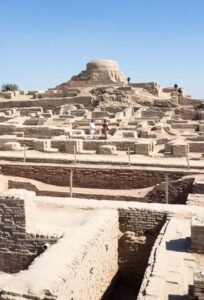
Often called the “Mound of the Dead,” Mohenjo-daro is not just an archaeological site; it is a window into a sophisticated civilization that flourished around 2500 BCE, long before many of the world’s famous empires existed. Today, it remains one of the most fascinating historical destinations in Pakistan, attracting historians, archaeologists, and curious travelers from across the globe. Walking through Mohenjo-daro feels like stepping into an ancient world frozen in time. The ruins reveal how people lived thousands of years ago with a level of organization that still amazes historians today.
Archaeologists discovered wide streets laid out in a perfect grid system, advanced drainage networks, residential neighborhoods, and impressive public buildings. These discoveries prove that the inhabitants of Mohenjo-daro had already developed a highly organized urban lifestyle centuries before similar systems appeared in many other parts of the world.
Because of its immense historical importance, Mohenjo-daro has been recognized as a UNESCO World Heritage Site, preserving the legacy of one of humanity’s earliest planned cities.
The Great Bath – The City’s Most Iconic Structure
One of the most remarkable landmarks inside Mohenjo-daro is the Great Bath, a massive public water tank believed to have been used for ritual purification or communal gatherings.
Constructed with baked bricks and sealed with natural bitumen, the bath demonstrates the incredible engineering skills of the Indus Valley people. Stairs lead down into the pool from both sides, and the structure is surrounded by rooms that may have served as changing areas.
Even today, the Great Bath stands as one of the best-preserved public water structures from the ancient world.
Advanced Urban Planning Ahead of Its Time
One of the most impressive features of Mohenjo-daro Pakistan is its advanced city planning. The city was divided into two main sections:
- The Citadel – A raised platform that housed important public structures and administrative buildings.
- The Lower City – Where the majority of residents lived in well-organized residential blocks.
Many houses had private wells, bathrooms, and drainage systems connected to a citywide sewer network. This level of sanitation was incredibly advanced for a civilization that existed nearly five millennia ago.
A Civilization Full of Mysteries
Despite decades of research, many mysteries still surround the people of Mohenjo-daro Pakistan. Their script has not yet been fully deciphered, and historians continue to debate how and why the city eventually declined.
Artifacts discovered here — including pottery, jewelry, toys, and seals — reveal a society that was creative, artistic, and connected through ancient trade routes that extended across Asia.
These discoveries make Mohenjo-daro not only a historical site but also a living puzzle for archaeologists around the world.
The Mohenjo-daro Museum
Visitors can deepen their understanding of the site at the nearby Mohenjo-daro Museum, which displays artifacts excavated from the ruins.The Mohenjo Daro Museum Larkana shows that the Indus Valley Civilization had a high level of culture and organization. It is a place where people can learn about their ancient culture, lifestyle, and techniques. It also has a vast ground, numerous amusements, and food courts near it. You also find some animal figures painted on the walls of the Mohenjo Daro Museum.
Here you can see:
- Ancient pottery and tools
- Jewelry made from precious stones
- Terracotta figurines
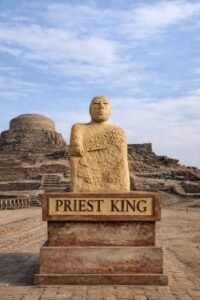
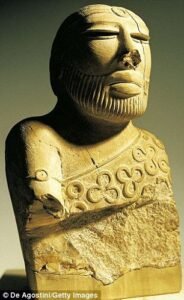
- The famous Priest-King statue, one of the most iconic relics of the Indus Valley Civilization
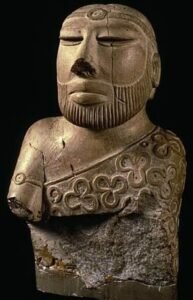
“Priest King” statue, Mohenjo-daro, late Mature Harappan period (2300-1900 BCE), National Museum, Karachi, Pakistan
Why Mohenjo-daro Is a Must-Visit Destination
For travelers interested in history and culture, Mohenjo-daro offers a truly unique experience. It is one of the oldest planned cities in the world and a powerful reminder of humanity’s early achievements.
- One of the oldest urban settlements in human history
- A UNESCO World Heritage Site
- Extraordinary ancient architecture and engineering
- A deep connection to the roots of South Asian civilization
- A peaceful archaeological landscape perfect for exploration
For many international travelers, visiting Mohenjo-daro is like walking through the earliest chapters of human civilization.
Best Time to Visit
The ideal time to explore Mohenjo-daro Pakistan is between October and March, when temperatures in Sindh are cooler and more comfortable for walking around the archaeological site.
During these months, visitors can explore the ruins at a relaxed pace while enjoying the cultural atmosphere of rural Sindh.
How to Reach Mohenjo-daro Pakistan
Mohenjo-daro is located near the city of Larkana in Sindh province. Travelers can reach Larkana by road or domestic flights from major cities.
- Karachi
- Hyderabad
- Sukkur
From Larkana, the archaeological site is just a short drive away.
Experience Ancient Pakistan with Revibe Journeys
At Revibe Journeys, we believe travel should connect people with the stories that shaped our world. A visit to Mohenjo-daro is not just a tour — it is a journey through 5,000 years of human history.
Our cultural tours allow travelers to explore Pakistan’s rich heritage while experiencing authentic hospitality and unforgettable landscapes.
Whether you are a history enthusiast, cultural explorer, or curious traveler, Mohenjo-daro promises an unforgettable adventure into one of the world’s earliest civilizations.
Step back in time and discover the mysteries of Mohenjo-daro Pakistan with Revibe Journeys.
