818 / metres
Rohtas Fort experiences hot summers and pleasantly cool winters. Spring and autumn are ideal for visits, offering mild temperatures and clear views of the surrounding hills.
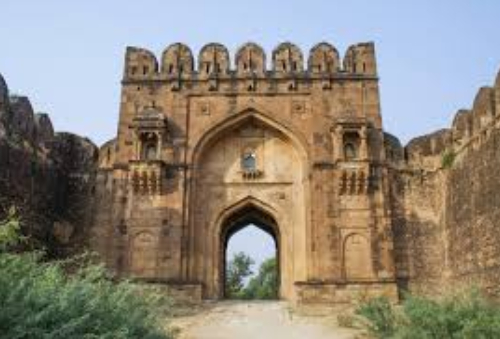
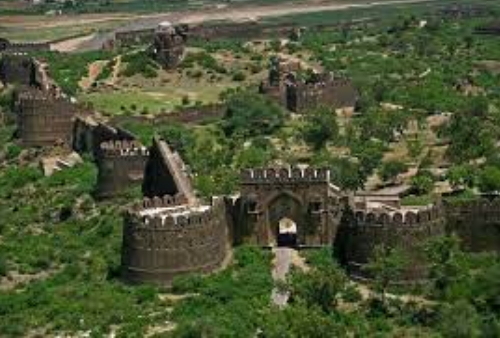
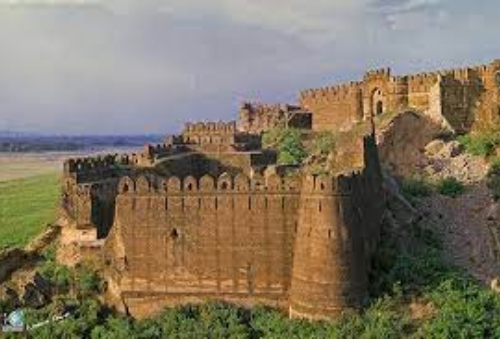
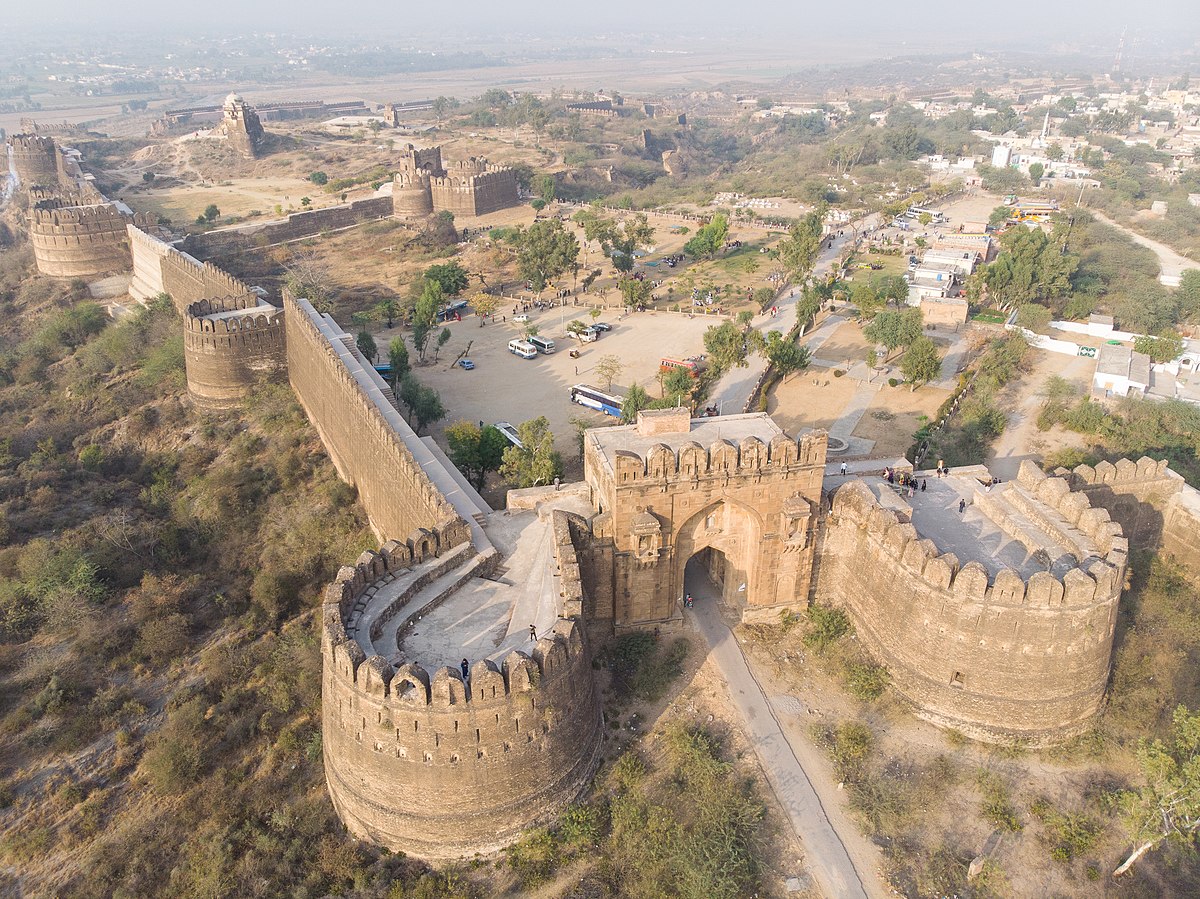
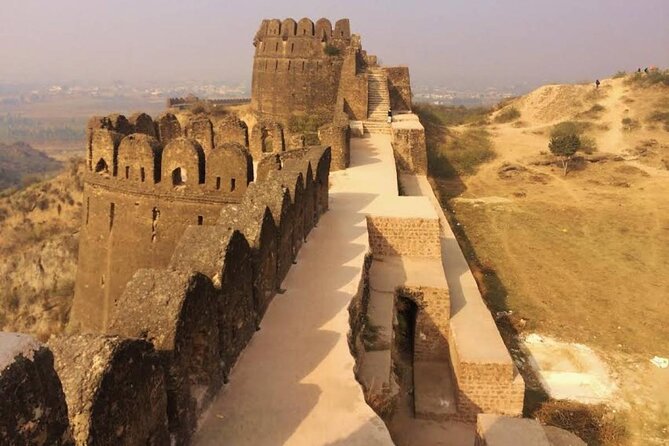
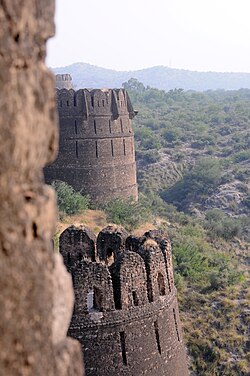
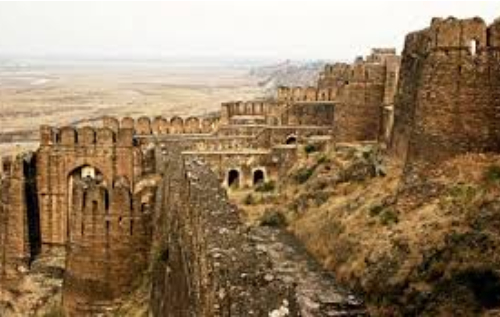
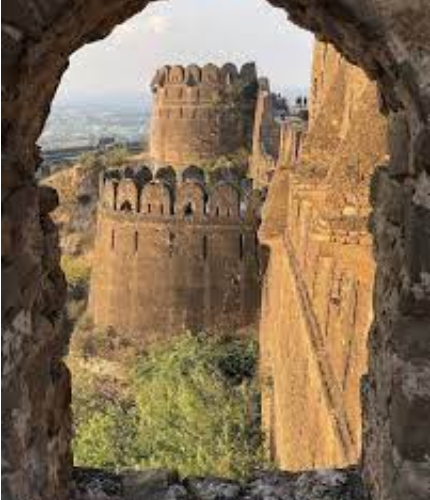
Rohtas Fort, a UNESCO World Heritage Site, is a massive 16th-century fortress built by Sher Shah Suri to secure his empire against the Mughals. Famous for its towering walls, grand gates, and strategic hilltop location, it remains one of South Asia’s most impressive examples of military architecture.
Built in 1541 by Sher Shah Suri after defeating Humayun.
Designed to control the local Gakhar tribes and secure the Grand Trunk Road.
Never captured in battle, making it an impregnable fortress.
Represents early Islamic military architecture blended with Afghan and Hindu influences.
Spring and winter are the best seasons to explore Rohtas Fort, offering cool breezes and comfortable walking conditions. Summers can be harsh and dry, making mid-day visits difficult. Autumn provides warm, pleasant weather, while the monsoon season brings lush greenery to the surrounding landscape.
Nearby towns offer traditional Punjabi dishes such as saag with makki roti, channa, kebabs, and fresh tandoori naan. Visitors can enjoy desi chai, parathas, and simple home-style meals. Locally available snacks and sweets also add to the cultural flavor of the region.
Rohtas Fort showcases remarkable stone masonry, carved motifs, and inscriptions on its gates and structures. Local artisans in the surrounding region produce pottery, handwoven textiles, wooden crafts, and traditional embroidery. The fort itself reflects centuries-old craftsmanship rooted in Afghan and Indo-Islamic traditions.
The region around Rohtas Fort is inhabited by small Punjabi communities engaged in farming, livestock rearing, and small-scale trade. The local population reflects rural traditions, strong cultural values, and close community ties, with many families connected to historic settlements that existed near the fort.
The grandest and most well-preserved gate, featuring intricate calligraphy and battlements.
Two of the fort’s 12 gates, used for defensive purposes, offering stunning views.
A Mughal-era royal residence built inside the fort, showcasing Persian and Rajput architectural styles.
Two ancient stepwells (Shahi Baoli & Sar Gate Baoli) built to provide water storage for the fort’s residents.
A small yet elegant structure, believed to be a residence for the royal women.
A mosque with an Afghan-style dome, alongside military barracks that once housed soldiers.
Rohtas Fort is known for its 12 monumental gates, some of the largest in South Asia. Despite being designed for war, it was never attacked. The fort spans over 70 hectares and features a blend of Afghan and Hindu architectural elements, making it a unique historical masterpiece.